
Hey! Human! Leave Those Snags Alone!
By Kathy Schwengler
Education & Outreach Coordinator
Eagle Point-Blue Rapids Parks Council
Take a walk in any mature forest and you’ll see a few of these snags. A “snag” is a dead standing tree. Humans tend to find them worthless or ugly, but our forest friends say otherwise. Snags are also known as “wildlife trees” because they are an essential resource for many creatures who call the forest home.
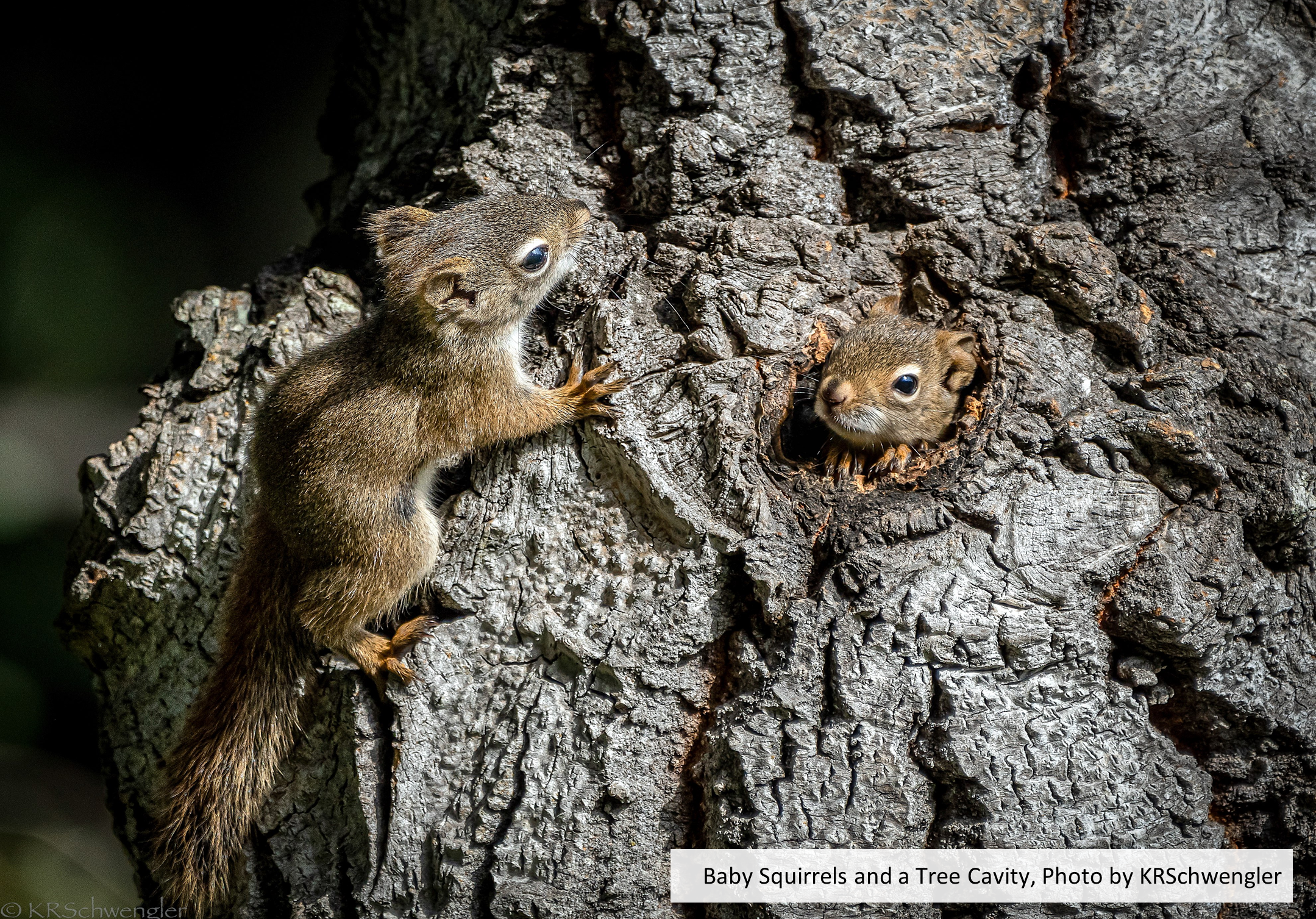
Snags with holes or loose bark, and even living trees with cavities provide places to store food, to den in cold weather and safe places to raise babies. Standing snags are also used by various woodpecker species as drums, to signal territory and status.
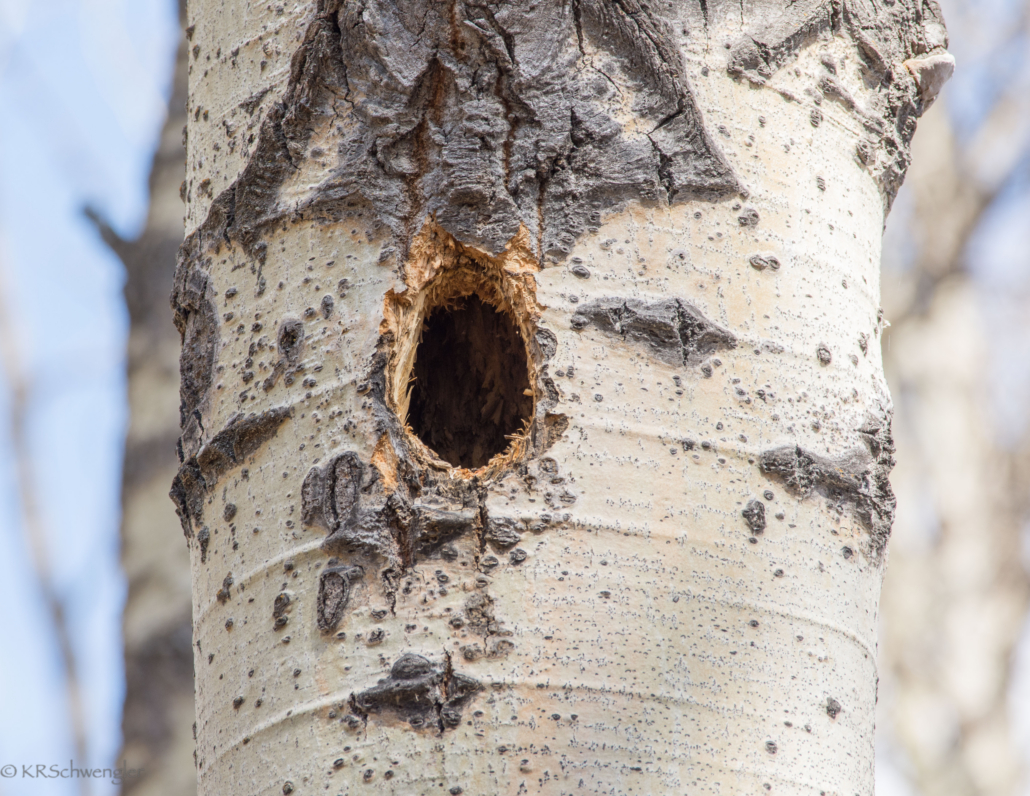
When we turn our attention to tree cavities, most of us would assume that only woodpeckers excavate them. While woodpeckers are the most prolific tree cavity excavators, nuthatches and chickadees can also make their own tree cavities. Birds capable of creating a nest cavity are called primary cavity nesters.
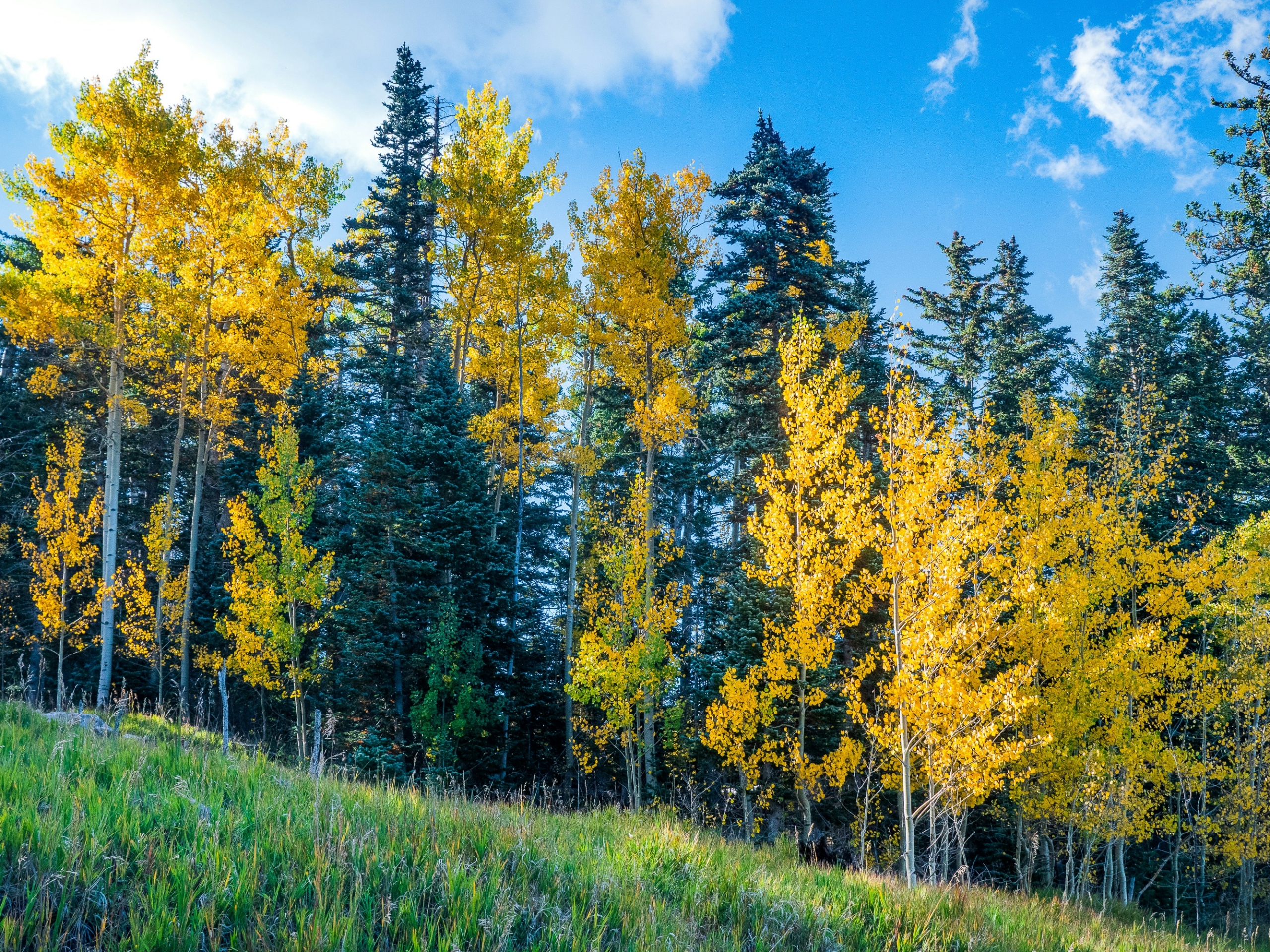
In the Drayton Valley area, trembling aspen is the favored species for excavating a nest cavity, especially older aspen that have been infected by fungi commonly called conks. Balsam poplar is a second choice and it is used when mature aspen are in short supply.
Once excavated, tree cavities are lined with soft materials before eggs are laid. Pileated woodpeckers only use their nest cavity for one season. Once abandoned, they are a hot commodity amongst the many other secondary cavity nesters who need a safe place to raise a family but lack the tools to make their own.
Mammals use these cavities, too! In the case of Northern Flying Squirrels, as many as 10 flying squirrels may huddle in a single tree cavity during cold weather. Flying squirrels also use tree cavities to cache food.
Tree cavities can be used for many years, even after the tree itself has died and become a snag.
Here’s a list of local birds & mammals that use tree cavities:
Tree Cavity Excavators
 Pileated woodpeckers
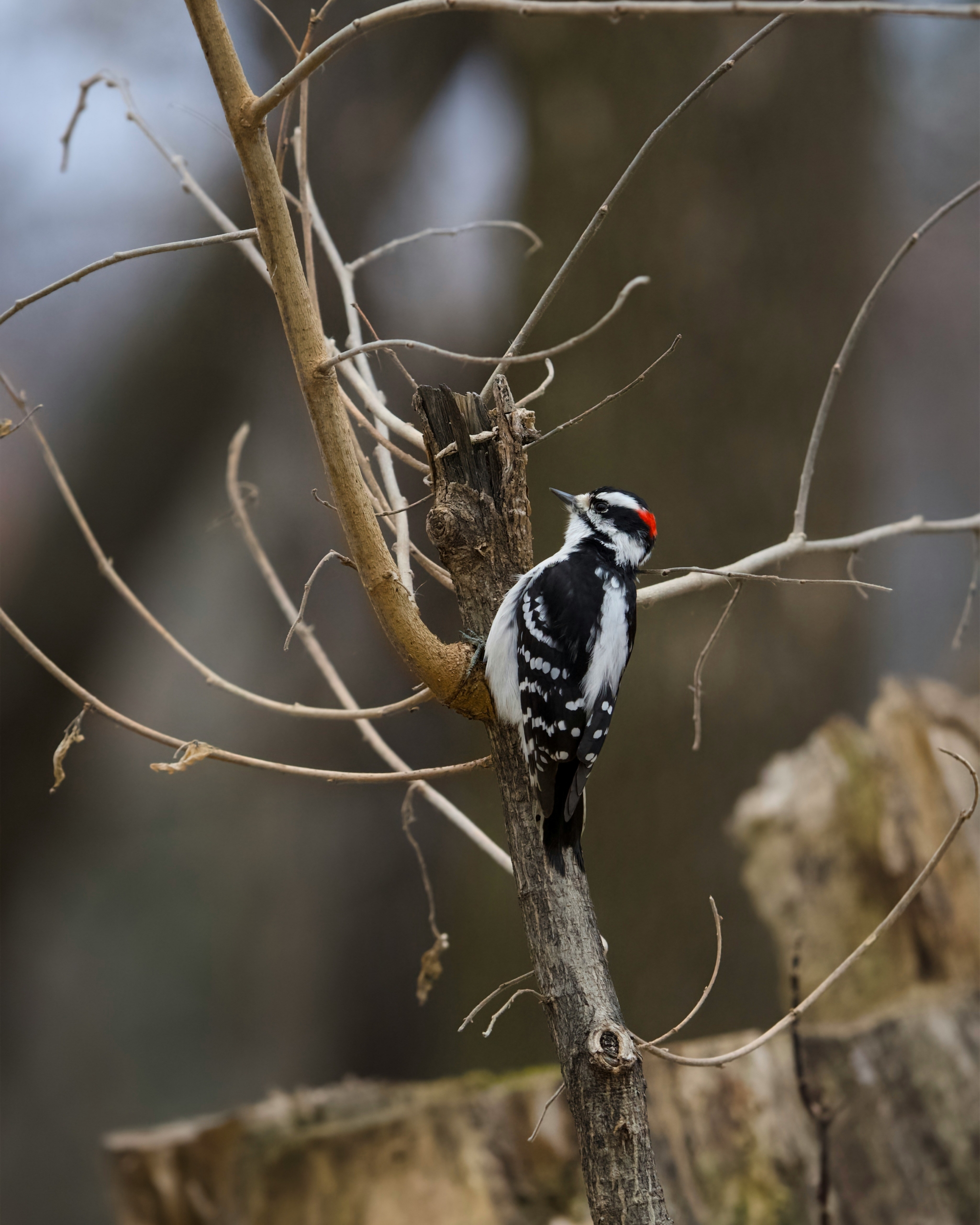
Hairy woodpeckers
Downy woodpeckers
Black Backed Woodpeckers
American Three-Toed Woodpecker
Yellow-Belled Sapsucker
Northern Flicker
Red-breasted Nuthatch
White-breasted Nuthatch
Black Capped Chickadee
Boreal Chickadee
Tree Cavity/Snag Users
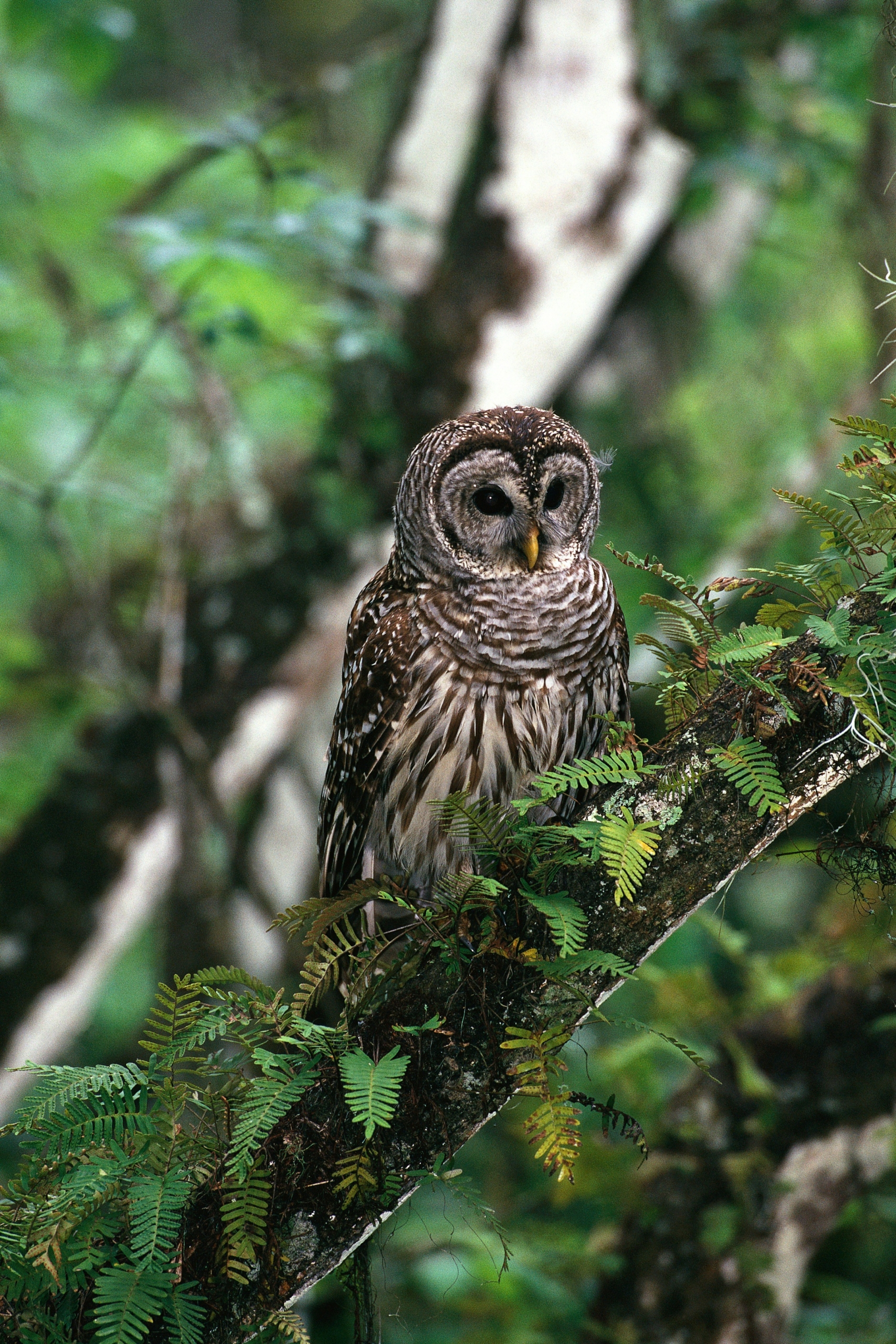
Barred Owls like this one, use the tree cavities abandoned by Pileated Woodpeckers.
Flying Squirrel (denning, raising families)
Red Squirrels (raising families)
Least Chipmunks (raising families)
Northern Long Legged Bat (resting)
Silver Haired Bat (resting)
Little Brown Bat (resting)
Pine Martens (raising families, denning)
Fishers (raising families, denning)
Barred Owls (raising families)
Northern Saw-whet Owl (raising families)
Northern Pygmy Owl (raising families)
Boreal Owl (raising families)
Bufflehead Duck (nesting)
Common & Barrows’ Goldeneye (nesting)
Hooded Merganser (nesting)
Tree Swallow (nesting)
Purple Martin (nesting)
House Wren (nesting)
Dark Eyed Junco (nesting, but not common)
Please be considerate of our wild neighbours when logging, clearing your acreage, or farm land. A neat and tidy forest is often a barren forest. Standing and downed dead trees provide critical places for wild animals to hide, raise families and store food. Tree cavities may be used for years, by many birds and mammals. Habitat destruction is the leading problem our forest friends face.
In 2022, trees containing tree cavity nests of pileated woodpeckers have been added to the Migratory Birds Convention Act1, which means that the tree cavities are protected under law. These cavities are protected for 36 months after being reported as unoccupied by any bird species.
For more information on the protections of the Migratory Bird Convention Act, visit 1https://www.canada.ca/en/environment-climate-change/services/migratory-birds-legal-protection/convention-act-regulations.html

